
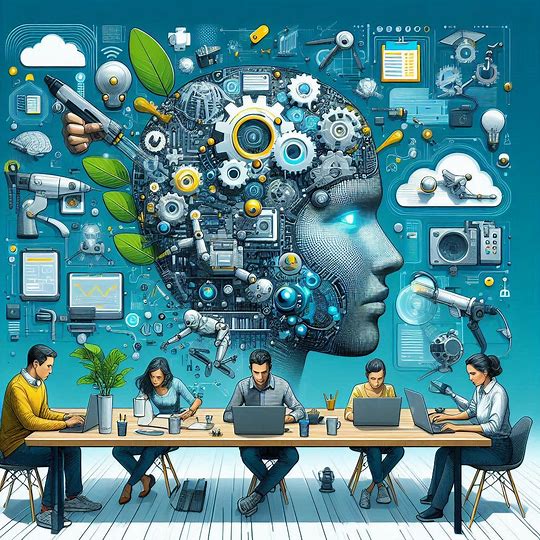
How Gen Z is Shaping the Future of Work with AI
 Saarthi Team|Jun 7, 2024|7 min read
Introduction
The year is 2025, and a new force has unequivocally taken the reins in the evolving workplace: Generation Z. Born roughly between 1997 and 2012, this demographic didn't just grow up with the internet; they are the true digital natives, immersed in an AI-driven world since childhood. For them, AI isn't a futuristic concept or a complex invention to be feared; it's as natural and ubiquitous as a smartphone, a standard tool in their digital toolbox, much like Word or Excel was for previous generations.
This inherent comfort with artificial intelligence isn't just influencing how Gen Z performs their daily tasks; it's fundamentally reshaping workplace expectations, productivity, learning, and even the very definition of a "good boss." As they increasingly populate the workforce and move into leadership roles, Gen Z, armed with AI, is not just adapting to the future of work - they are actively building it.
How Gen Z leverages AI daily
AI: Gen Z's Intuitive Teammate
For Gen Z, AI isn't an "experimental" technology; it's a practical solution. They've used AI-powered assistants like Siri and Alexa, navigated social media algorithms, and leveraged plagiarism checkers like Turnitin throughout their academic lives. This lifelong familiarity means they are quicker to identify use cases and apply AI to solve problems, often with an intuitive understanding that even its developers might not have envisioned.
A Google survey revealed that 93% of young professionals between 22 and 27 years old use at least two AI tools, including ChatGPT and Bard, during their workweek. Moreover, 61% of Gen Z workers declare they cannot function without generative AI in their daily operations. This isn't just about efficiency; it's about a fundamental shift in how work gets done.
How Gen Z leverages AI daily:
- Content Generation: From drafting initial emails and reports to generating creative concepts for marketing campaigns, Gen Z uses AI to kickstart their work, saving significant time on first drafts.
- Data Analysis & Summarization: AI helps them quickly process large datasets, identify patterns, and summarize complex information, freeing them to focus on strategic insights rather than tedious manual review.
- Coding & Debugging: For those in tech roles, AI assists in writing code, identifying errors, and suggesting optimizations.
- Research & Information Synthesis: AI chatbots often act as a primary search engine, delivering summarized and relevant information faster than traditional search methods.
- Administrative Tasks: Scheduling, organizing, and managing daily workflows become seamless with AI assistants.
This comfort and reliance on AI means that companies looking to attract and retain top Gen Z talent must not only adopt AI tools but also foster a culture where their use is encouraged and integrated.
Reshaping Productivity and Efficiency
Gen Z's approach to AI is driven by a strong desire for efficiency and a healthy work-life balance. They recognize AI's potential to automate repetitive, mundane tasks, thereby freeing them up to focus on more complex, creative, and strategic initiatives.
- Automation of Routine Tasks: AI excels at data entry, scheduling, basic customer queries, and content organization. By offloading these tasks to AI, Gen Z can dedicate more time to innovation, problem-solving, and human-centric interactions.
- Enhanced Problem Solving: When faced with a problem, Gen Z is comfortable turning to AI first for potential solutions or brainstorming ideas, leveraging its processing power to quickly explore multiple angles.
- Augmenting Creativity: AI tools like image generators and advanced text models become collaborative partners in creative processes, helping Gen Z to explore ideas, iterate designs, and refine concepts at an unprecedented pace.
This push for AI-driven efficiency means the traditional "grind" culture is being challenged. Gen Z seeks work environments where their mental health is prioritized, information overload is minimized, and balance is key - and they see AI as a crucial enabler of this.
Changing Workplace Expectations: AI as a 'Boss'
Perhaps one of the most surprising insights into Gen Z's relationship with AI is their evolving perception of leadership. Reports indicate that a significant portion of Gen Z workers (some studies show up to a third) would rather have an AI boss than a human one. This isn't a rejection of human connection, but rather a reflection of what they prioritize in a working relationship:
- Judgment-Free Feedback: AI offers a safe space to ask "basic" questions, review work, or clarify instructions without fear of judgment, eye-rolls, or interruptions.
- Clear, Instant Answers: For a generation used to on-demand information, AI provides rapid, specific, and unbiased feedback, filling the gap where human managers might be vague or delayed.
- No Micromanagement: AI doesn't micromanage. It listens to every word, remembers every request, and provides direct responses, fostering a sense of autonomy.
- Neutrality & Fairness: AI doesn't care about office politics, cliques, or who is liked more. It's neutral, offering a perceived level playing field where ideas are judged solely on merit.
This preference signals a desire for transparent, objective, and supportive leadership. Companies must adapt by training human managers to emulate these AI-driven positives: providing clear, empathetic feedback, fostering two-way conversations, and creating an environment where employees feel seen, heard, and valued.
Driving AI-Powered Learning and Skill Development
Gen Z understands that continuous learning and adaptability are critical in an AI-driven world. They actively seek out opportunities to upskill and expect their employers to provide AI-powered learning resources.
- Personalized Learning Paths: AI-driven learning platforms can offer tailored training programs based on individual skill gaps and career goals, accelerating professional growth.
- Continuous Feedback & Improvement: AI systems can provide real-time feedback on performance in various tasks, helping Gen Z employees identify areas for improvement and hone their skills more effectively.
- DIY Upskilling: If formal training isn't provided, Gen Z is unafraid to "bring their own AI" to work, using consumer-grade AI tools to teach themselves new skills or optimize existing ones. Many already use AI in their personal lives for learning new languages, compiling nutrition plans, or researching complex topics.
This self-driven approach to skill development, often augmented by AI, highlights Gen Z's proactive stance in preparing for the future of work.
The Role of Saarthi in Empowering Gen Z with AI
As an organization deeply committed to empowering students and freshers, Saarthi is at the forefront of integrating AI into career development, directly aligning with Gen Z's expectations and needs. India's first college-corporate network, Saarthi understands that simply connecting students to jobs isn't enough; they need to be future-ready.
Saarthi's platform goes beyond traditional job boards by leveraging AI to:
- Provide Tailored Job Matches: Instead of generic applications, Saarthi uses AI to intelligently match students with employers and job roles that genuinely align with their skills, academic background, and career aspirations. This directly addresses the Gen Z desire for personalized opportunities and efficient job searches.
- Offer AI-Powered Soft Skill Development: Recognizing that while Gen Z is tech-savvy, "people skills" remain crucial, Saarthi provides an AI soft skill development tool. This innovative feature offers personalized modules and interactive exercises, delivering targeted feedback on communication, problem-solving, adaptability, and teamwork. For a generation that values direct, unbiased feedback, this AI coach helps bridge skill gaps that traditional education might miss.
- Deliver AI Mock Interview Tools: Interview anxiety is universal, but Gen Z wants efficient ways to prepare. Saarthi's AI mock interview tool provides a realistic simulation, analyzing responses for content, clarity, and even non-verbal cues. This instant, data-driven feedback allows students to sharpen their interview skills and significantly boost their confidence before facing human recruiters - a direct reflection of Gen Z's preference for practical, AI-assisted preparation.
- Streamline Placement Processes: By digitizing and optimizing the college-corporate connection, Saarthi reduces the "inefficient and overcrowded processes" that often frustrate both students and institutions. This efficiency aligns with Gen Z's demand for streamlined, technology-driven workflows.
- Foster Direct Industry Partnerships: Saarthi builds strong industry ties to open doors for students to dream opportunities. For Gen Z, who often prioritize professional values, fulfillment, and growth over traditional perks, direct access to reputable companies is invaluable.
By providing these AI-powered features, Saarthi isn't just a platform; it's a strategic partner for Gen Z, equipping them with the tools and skills to thrive in an AI-driven world and helping colleges achieve their goal of 100% placement success.
Addressing Concerns and Ethical Considerations
While Gen Z broadly embraces AI, they are also acutely aware of its potential risks. They often raise concerns about:
- Job Displacement: A significant portion of Gen Z worries about AI automating entry-level and routine roles, fearing job displacement. This drives their desire to acquire AI skills to remain competitive.
- Algorithmic Bias: Having grown up online, Gen Z is more mindful of data security, privacy, and algorithmic bias. They want transparency in AI models and ethical guidelines for its use.
- Over-reliance & "Intellectual Dwarfism": Some Gen Z workers express concern that over-reliance on AI could stifle creativity and critical thinking. They seek a balance where AI augments, rather than replaces, human intelligence.
This sophisticated perspective means Gen Z isn't just adopting AI; they're pushing for its responsible development and deployment. Companies must engage them in conversations about AI ethics, provide clear policies, and demonstrate a commitment to using AI in a way that empowers, not diminishes, their workforce.
The Future is Now: Gen Z and AI as a Partnership
Gen Z is not just a generation entering the workforce; they are a driving force behind its rapid evolution. Their intuitive grasp of technology, combined with a pragmatic approach to problem-solving and a strong desire for efficiency and work-life balance, makes them ideal partners in the AI revolution.
From optimizing resume writing and acing interviews with AI tools to leveraging AI for daily tasks and demanding AI-powered learning, Gen Z is redefining what a productive and fulfilling work experience looks like. Companies that recognize this shift and proactively integrate AI-first strategies, supported by platforms like Saarthi that empower students with essential AI skills and connections, will be best positioned to attract, retain, and empower the workforce of the future.
The partnership between Gen Z and AI isn't just shaping the future of work; it's building a smarter, more efficient, and potentially more human-centric workplace for everyone. Are you ready to join them?